



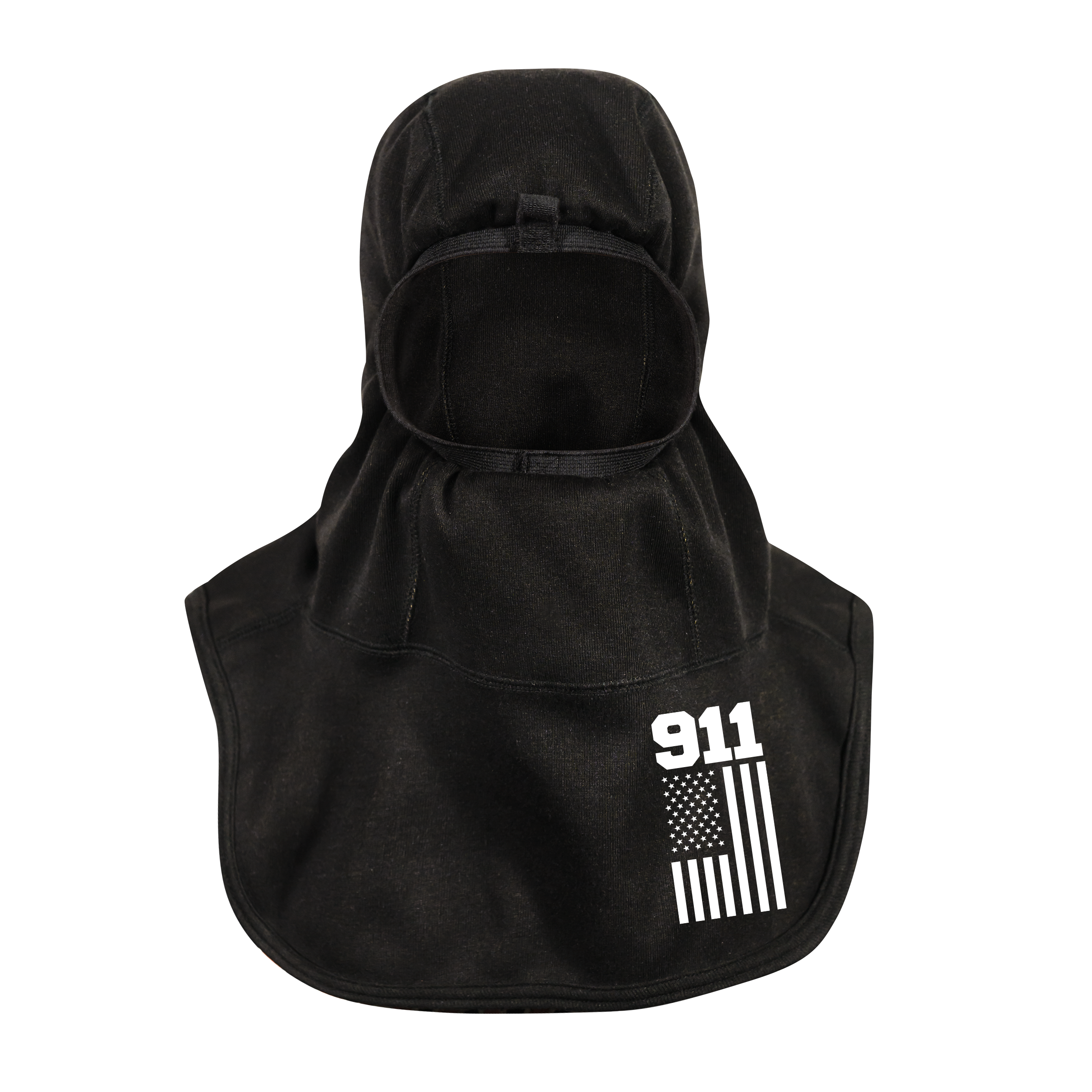
What changed: NFPA 1971 became NFPA 1970
For decades, firefighter hoods were certified to NFPA 1971, the standard for structural and proximity firefighting ensembles. Its last edition came out in 2018. NFPA has since combined NFPA 1971 with several related standards, including the ones for SCBA and PASS devices, into a single standard: NFPA 1970, 2025 edition, issued in 2024. For hoods, the big changes are:
- A particulate-blocking barrier is now mandatory in structural firefighting hoods. Under NFPA 1971-2018 it was optional.
- The barrier must cover nearly the whole hood, including the top of the head and much of the bib, and the seams are tested too.
- A barrier hood must block at least 90% of particles between 0.1 and 1.0 microns, the size range of the fine particles in fire smoke.
- Proximity hoods, worn near intense radiant heat from outside the fire, are not required to have the barrier. They are not structural hoods and are not for in-fire use.
The heat and flame tests carry over from the old standard essentially unchanged, including thermal protective performance, flame resistance and shrinkage. A good knit Nomex hood still protects you from heat. The difference is what it lets through.
Why hoods now need a particulate barrier
Your hood covers your neck, jaw, throat and ears, the gap between your SCBA facepiece and your coat collar. Exposure research by NIOSH and others has found soot, and the cancer-linked chemicals it carries, on firefighters' necks and jaws after fires. The skin in that area absorbs chemicals more readily than skin on many other parts of the body.
Knit Nomex, Nomex blend, carbon, P84 and PBI hoods are built to stop heat and flame, but fine smoke particles can pass between the knit fibers. A particulate barrier is a membrane layer that lets moisture vapor out and stops those particles before they reach your skin.
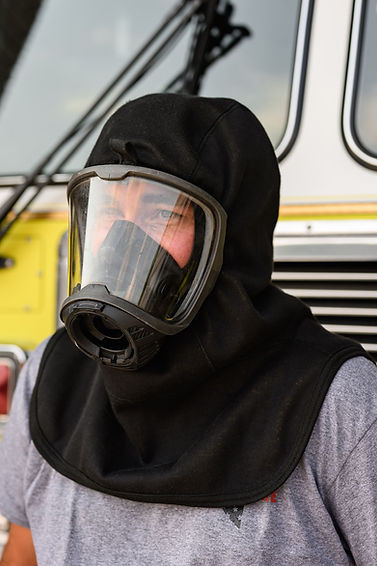
Is my Nomex hood still legal to wear or buy?
Yes, with one catch. A hood certified to NFPA 1971-2018 keeps that certification. It stays certified under the edition it was made to, and it can still be sold and worn. What changed is manufacturing. Once the transition period ended, hood makers could no longer certify new hoods to the old edition, so every NFPA 1971-2018 hood on the market today is existing stock. When a design is gone, it's gone. Before you wear one, keep these in mind:
- Your department's PPE policy decides. Many departments are moving members to NFPA 1970 hoods as gear is replaced; others allow 1971-2018 hoods until they're retired.
- Retirement rules haven't changed. Under NFPA's care and maintenance standard (NFPA 1851, now part of NFPA 1850), structural PPE is retired no later than 10 years after its manufacture date, or sooner if it's damaged.
- Inspect any hood before you wear it. Holes, thin spots, or a face opening that is stretched or no longer seals against your SCBA facepiece all mean it is time to replace it.
- A second hood lets you swap into a clean one after a fire while the dirty one is cleaned.
What to look for in a particulate hood
Particulate hoods don't all feel the same. The barrier adds a layer, so a particulate hood can feel warmer and less stretchy than the thin knit hood you're used to. Here's what to compare:
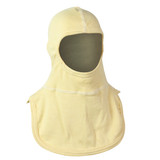
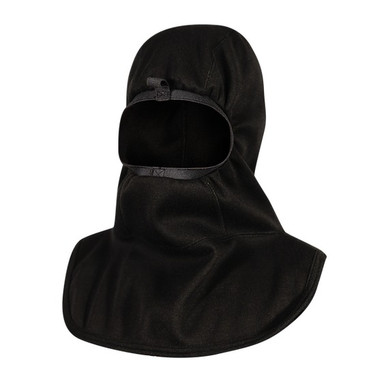
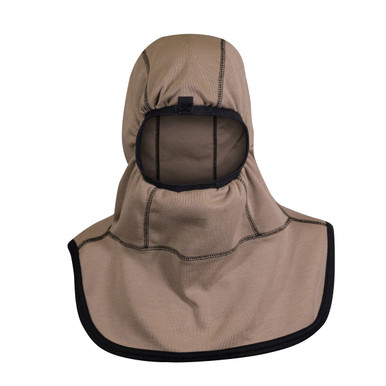
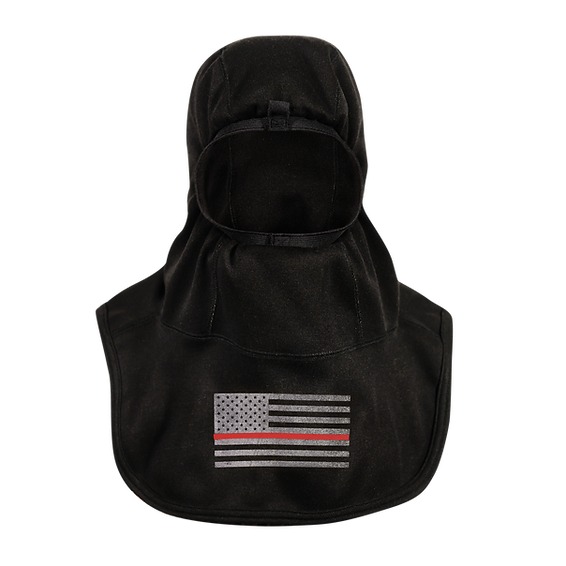
- Certification. For structural firefighting, look for NFPA 1970-2025 on the label. Some particulate hoods, such as the Majestic Halo line, have a barrier but are certified to the previous edition, NFPA 1971-2018.
- Construction. A laminated single-layer design like FORTEX's trilaminate builds the barrier into one fabric. Other hoods sew a separate barrier between knit layers.
- Face opening. The hood has to seal against your SCBA facepiece every time. FORTEX uses exposed elastic that grips the facepiece directly.
- Fit and sizing. NFPA 1970 adds minimum sizing requirements, so some hoods now come in sizes. FORTEX is one universal size, 20 inches long.

Caring for your hood
A hood only protects you if it's clean and intact. Follow the care label and your department's PPE cleaning program. Clean the hood after every fire exposure using a method the maker approves, then check the barrier and the face opening after each wash. Majestic publishes PFAS and Prop 65 compliance statements for its NFPA 1970 structural hoods. Ask us for a copy.